Hurricane Genevieve, which is whipping up the Pacific Ocean about 500 miles off the southern tip of Baja California, will send big waves rolling toward beaches in San Diego County this week, creating hazardous swimming conditions, the National Weather Service says.
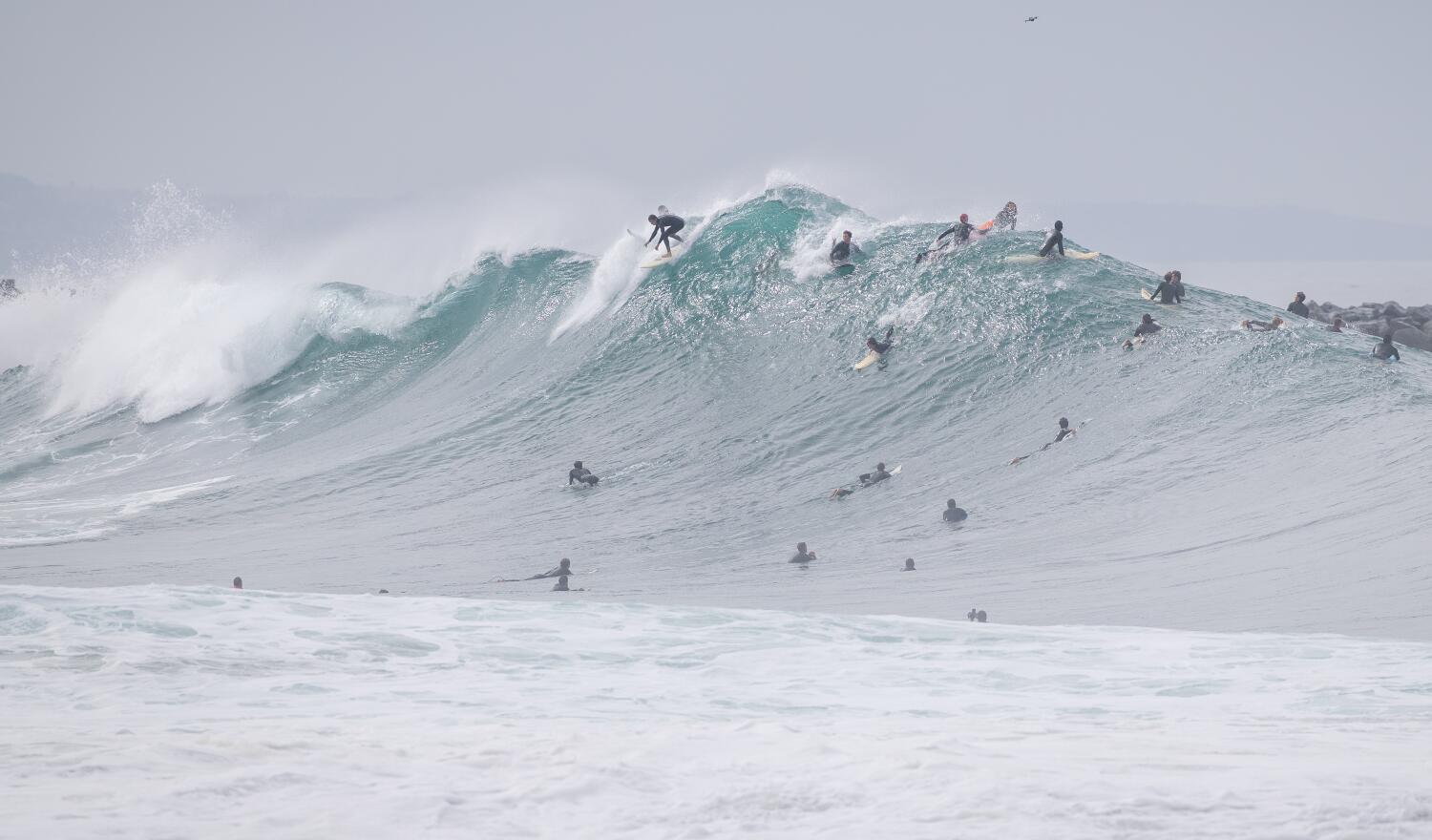
Now a Category 4 hurricane and moving northwest with sustained winds of about 155 mph, Genevieve is expected to generate up to 11-foot swells by Wednesday afternoon along beaches that face south and southwest.
In most coastal areas in San Diego and Orange counties, the forecast calls for surf of 3 to 6 feet, with larger sets periodically reaching 7 feet.
There will be heavy surf and strong rip currents along L.A. County beaches, the National Weather Service says.
While the waves will attract experienced surfers, the National Weather Service says the hurricane is bringing life-threatening surf and rip currents that make swimming hazardous. Forecasters are urging beachgoers to check the surf forecast before choosing a beach, and to swim near a lifeguard.
The hurricane emerged over warm water in the Pacific, where authorities say the El Niño climate pattern has arrived and will likely bring more stormy weather than usual to the southern United States, including Southern California.