As back-to-school season approaches, families will face higher prices for supplies and other costs for the upcoming academic year, a new analysis found.
The cost of a typical basket of school items, including notebooks, lunch boxes and index cards, is up nearly 8% this year compared to 2025, according to research from The Century Foundation, a progressive think tank, and Groundwork Collaborative, a progressive advocacy group. Americans will also pay 11% more for a typical school lunch, the groups found.
Families will spend roughly $4,000 per student on school supplies and lunches this year, including about $175 on school items and $3,800 on packed lunches, according to the analysis.
“It’s the second-biggest shopping event of the year after Christmas, and families are going to be facing a lot of pain this school year,” Lindsay Owens, executive director of Groundwork Collaborative, told CBS News.
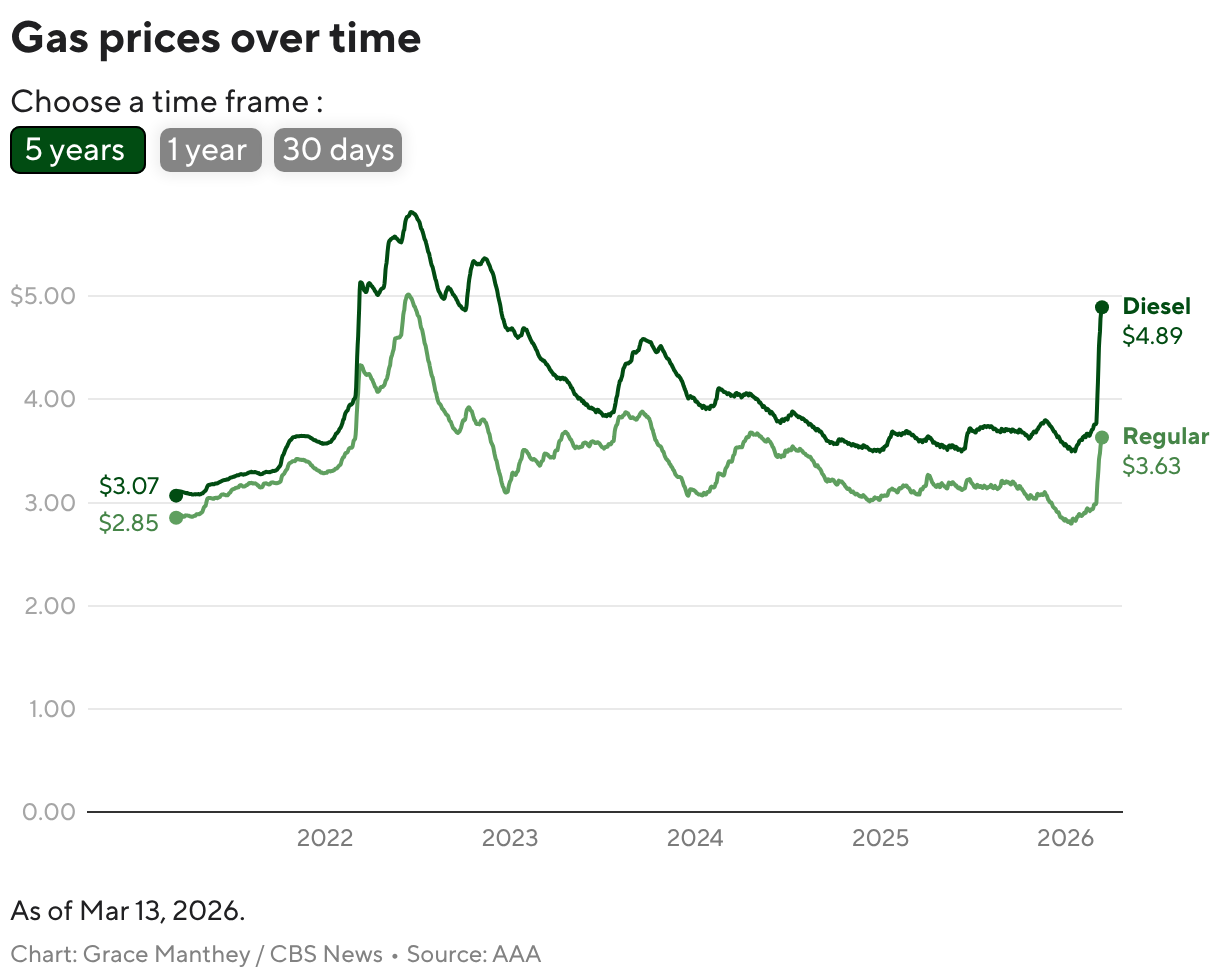
“Higher gas prices have filtered through to food and clothing, and tariffs are hitting these items heavily, too, because most school supplies are not made in the U.S. — they’re imported, ” she added.
Inflation across the U.S. slowed in June, easing to an annual rate of 3.5%, from 4.2% in May, as fuel costs fell. Yet gas prices have flared in July amid renewed conflict in the Middle East.
Among the products that are costlier this year, according to The Century Foundation and Groundwork:
School supplies
Lunch box: $18.91 (up 27% from 2025)
One-subject notebook: $4.92 (up 23%)
Index cards: $3.86 (up 22%)
Glue sticks: $7.68 (up 7.6%)
Lunch box staples
Blueberries: $4.89 (up 48% from 2025)
Sandwich bread: $4.36 (up 22%)
Apple juice: $4.14 (up 20%)
Animal crackers: $6.49 (up 15.7%)
What’s driving up costs?
Steeper U.S. tariffs on a range of imports have driven up the price of binders, pencils and other school supplies, the groups’ research shows. Many school essentials, such as pens, markers, notebooks and glue, are manufactured overseas, making them subject to higher tariffs.
For example, Newell Brands, the maker of Sharpie pens, Elmer’s glue and other classroom products, said in an earnings release earlier this year that it would hike prices to offset sharply higher tariff costs.
Matteo Anversa, the chief financial officer of Logitech, which makes electronics like headsets and keyboards, in May also cited stepped-up tariffs for a “sizable” increase in its U.S. prices.
Other school-supply companies also blame higher energy costs due to the Iran war for having to raise their prices. Acco Brands, the parent company of notebook and binder brands Mead, Five Star and Trapper Keeper, said in a May earnings call that higher oil prices stemming from the conflict have driven up the company’s costs and led to price hikes for consumers.
A recent survey of more than 1,000 parents by Credit Karma found that 45% expect to take on debt to cover back-to-school costs. Half of families plan to cut back on household expenses to cover those costs, according to Deloitte.
“Parents do what they can to try to get their kids to school with the essentials, so it’s not surprising folks are cutting back to make sure their kids have what they need,” Groundwork’s Owens said.