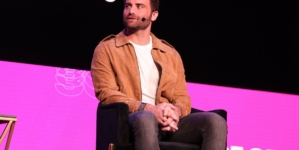
Investors are greeting President Trump’s nomination of Kevin Warsh to lead the Federal Reserve with cautious approval, while weighing key questions about how the former Fed governor’s crisis-era credentials and appetite for change could reshape U.S. monetary policy.
Warsh’s hawkish reputation as a former Federal Reserve governor from 2006 to 2011, coupled with his role during the 2008 financial crisis, has helped calm fears of a disruptive overhaul in how the central bank is run.
Even so, investors are expecting potential shifts at the Fed under Warsh’s leadership, following his previous comments about a need for change and a recent openness to lowering rates. While U.S. markets were little changed on Friday, investors moved away from safe-haven assets such as gold and silver, a sign of reassurance in Mr. Trump’s choice to replace Fed Chair Jerome Powell.
“That crisis-era experience also suggests to us that Warsh is the person you want running the Federal Reserve if there is a new disruption to the financial system,” said Jaret Seiberg of TD Cowen in a research note.
Here are three questions for investors with Warsh on tap to lead the Fed.
More rate cuts ahead?
A key question on Wall Street is how Warsh’s nomination might alter the Federal Reserve’s interest rate outlook. The central bank held its benchmark rate steady at its most recent meeting on Jan. 28, after officials in December penciled in just one rate cut for 2026.
At the same time, Mr. Trump has pressured the Fed to lower rates more aggressively, a call he renewed Thursday after the central bank’s latest meeting. “The Fed should substantially lower interest rates, NOW!” Mr. Trump wrote.
Warsh has long held hawkish views on inflation, meaning that he has leaned toward keeping interest rates higher as a way to fight inflation. More recently, however, Warsh has softened his stance, telling Fox News host Larry Kudlow that cutting interest rates and bringing down the yield curve could tee the U.S. economy up for the “next degree of acceleration.”
“The President and Treasury Secretary Bessent, who led the search, would not have supported his nomination otherwise,” said Thomas Ryan, North America economist at Capital Economics, in an email note.
Expectations for rate cuts edged slightly higher after Mr. Trump announced Warsh’s nomination, signaling that investors see room for easing this year, said Mark Luschini, chief investment strategist at Janney Montgomery Scott.
“There is some sense that he’s going to be pragmatic, but not necessarily ideologically opposed to the monetary setting becoming increasingly accommodative,” Luschini noted.
Even so, Warsh won’t have unilateral control over interest rates, as the federal funds rate is set by a majority vote of the 12 members of the Federal Open Market Committee (FOMC).
What about Fed independence?
Federal Reserve Chair Jerome Powell has steadfastly defended the central bank’s independence, stressing that its insulation from political pressure allows its officials to make decisions based on economic data, rather than at the whim of elected officials.
Powell reiterated that sentiment on Jan. 28, when he spoke at the central bank’s press conference to discuss its rate decision.
An independent central bank “is a good practice — it’s pretty much everywhere among countries that look at all like the United States, and if you lose that, it would be hard to restore the credibility of the institution,” Powell noted.
But Mr. Trump’s pressure on the Fed raises questions about whether his newly picked nominee could heed the president’s wishes over the economic data, experts note. Because of Warsh’s background, many analysts said they expect Warsh to uphold the independence of the central bank.
If Warsh bends under political pressure, he risks eroding his credibility among other members of the FOMC, Luschini said.
In April 2025, Warsh addressed the importance of Federal Reserve independence during remarks at a meeting hosted by the International Monetary Fund.
“I strongly believe in the operational independence of monetary policy as a wise economy decision,” Warsh said. “And I believe that Fed independence is chiefly up to the Fed.”
What does it mean for investors?
Experts noted that a new Fed chair pick also injects uncertainty into the markets as investors reassess how monetary policy could shift under new leadership.
Warsh has called for changes to the Fed’s regulatory and monetary framework, writing in a November Wall Street Journal op-ed that reducing the central bank’s balance sheet would free up liquidity and make it easier for households and small businesses to borrow.
In order for Warsh to instill confidence in markets, experts say investors will want more details on how he intends to run the Federal Reserve.
“This isn’t about whether Kevin Warsh would hike or cut tomorrow, next month, or even this year,” said Mark Malek, CIO at Siebert Financial, in an email note. “It’s about the market suddenly having to re-anchor its expectations around a Fed that might look, sound, and behave very differently from the one investors have grown used to over the past decade and a half.”