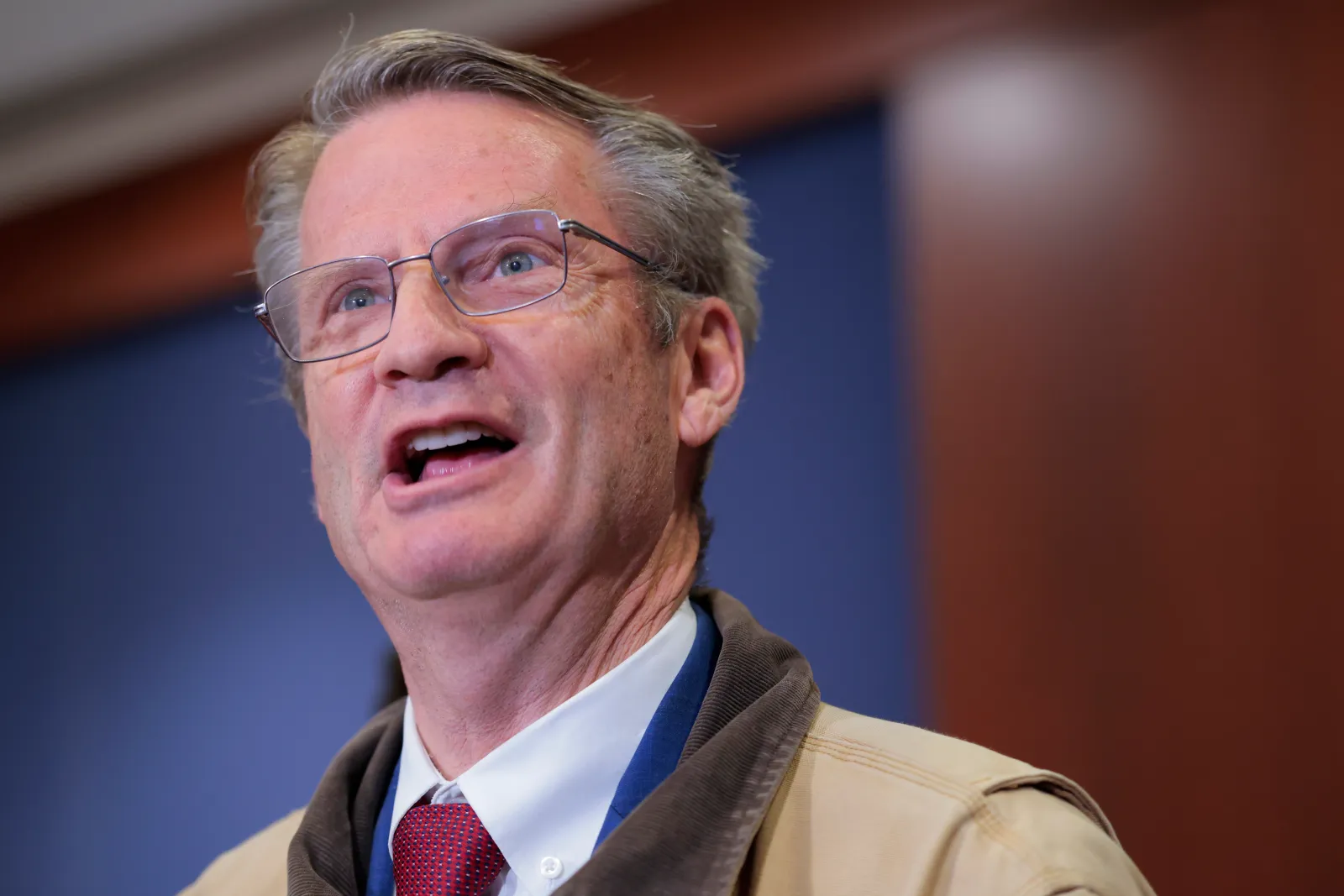
Representative Tim Burchett, a Tennessee Republican endorsed by President Donald Trump, accused oil companies and Washington lawmakers of driving up gas prices through “just greed” in a video posted on X late Tuesday, as Americans continue to feel the economic effects of the Iran war.
The congressman recorded the video while appearing to stand at a gas station filling up his vehicle, describing what he said was a false choice between everyday necessities and the cost of fuel. His remarks come as gas prices have climbed sharply nationwide since the conflict with Iran began in late February, and as a newly announced ceasefire has struggled to take hold.
Why It Matters
Gas prices have become one of the most immediate and visible domestic consequences of the Iran war, affecting household budgets and intensifying political pressure on the White House and Congress on the issue of affordability.
According to AAA, the national average price of gasoline has risen by more than $1 per gallon since the conflict began, crossing the $4 mark for the first time since 2022. Prices surged as fighting disrupted shipping through the Strait of Hormuz, a critical route for global oil supplies.
While oil markets briefly eased following the announcement of a two‑week U.S.–Iran ceasefire, renewed hostilities involving Israel and Hezbollah in Lebanon have cast doubt on the agreement’s durability, contributing to continued volatility in energy markets.
What To Know
In the video, Burchett dismissed arguments that high prices are simply the result of free‑market forces, indicating that government subsidies and tax policy undermine claims that the industry operates under true capitalism.
“Everybody will say, ‘Oh, Burchett, you don’t understand commodities. I thought you were a capitalist,’ ” he said. “No, it isn’t that. Heck no it isn’t. Capitalism isn’t about subsidizing with billions of dollars the oil industry, which we do, giving them tax credits, which we do.”
Burchett characterized the situation as “just greed.”
“This is not competition,” he said. “This is a gross misuse of power and greed. That’s all this is.”
He also targeted Washington broadly, saying both political parties bear responsibility.
“The problem is Washington, D.C., and it’s both parties, folks, bought and paid for by Big Oil,” Burchett said.
Addressing the Iran war directly, Burchett questioned why prices have risen so steeply given that the U.S. does not import crude oil from Iran.
“We buy zero percent of our oil from Iran,” he said, pushing back on claims that the conflict directly justifies price increases at the pump.
As an example, Burchett pointed to another petroleum‑based product sold at gas stations.
“That little quart of oil they sell in here—guess what? It doesn’t go up like gasoline does at the pump,” he said. “It’s a complete and total rip‑off. And they know it.”
He acknowledged that critics would urge him to act legislatively but argued that entrenched industry influence makes reform difficult.
“People say, ‘Do something about it, you’re in Congress.’ I’ll try,” he said, adding that his comments would likely cost him campaign donations from the energy sector.
Burchett’s message dovetails with broader political tension inside the Republican Party, where some lawmakers have expressed concern that the economic fallout from the Iran war—particularly fuel costs—could undercut support for the administration and its allies ahead of the midterms.
Trump has sought to reassure Americans that higher prices are temporary. The president has described rising gas prices as a “short‑term pain” tied to the conflict and said costs would fall once shipping through the Strait of Hormuz fully resumes. The White House has echoed that message, arguing that energy markets are reacting to uncertainty rather than permanent supply shortages.
Trump endorsed Burchett in November 2025, praising him on social media as a “national treasure” and a lawmaker who “never backs down and always puts America first.”
What Happens Next
Markets are watching whether the ceasefire between the U.S. and Iran can stabilize after a shaky start marked by Israeli strikes and heightened tensions in Lebanon, developments that have disrupted early hopes for sustained price relief.
In Washington, gas prices are expected to remain a focal point as lawmakers return to debates over energy policy, sanctions enforcement and oversight of corporate profits, with the economic impact of the Iran war likely to loom over upcoming budget and national security discussions.
In a polarized era, the center is dismissed as bland. At Newsweek, ours is different: The Courageous Center—it’s not “both sides,” it’s sharp, challenging and alive with ideas. We follow facts, not factions. If that sounds like the kind of journalism you want to see thrive, we need you.
When you become a Newsweek Member, you support a mission to keep the center strong and vibrant. Members enjoy: Ad-free browsing, exclusive content and editor conversations. Help keep the center courageous. Join today.