Wondering how early to get to the airport as some TSA officers call out sick during a partial government shutdown? There are a few ways for passengers to check security checkpoint wait times before their flights.
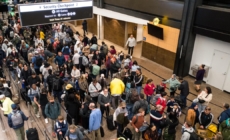
Security lines are growing longer at some airports, with about 10% of the TSA’s roughly 50,000 officers calling out sick on Wednesday. TSA workers have now gone without pay for a 34th straight day.
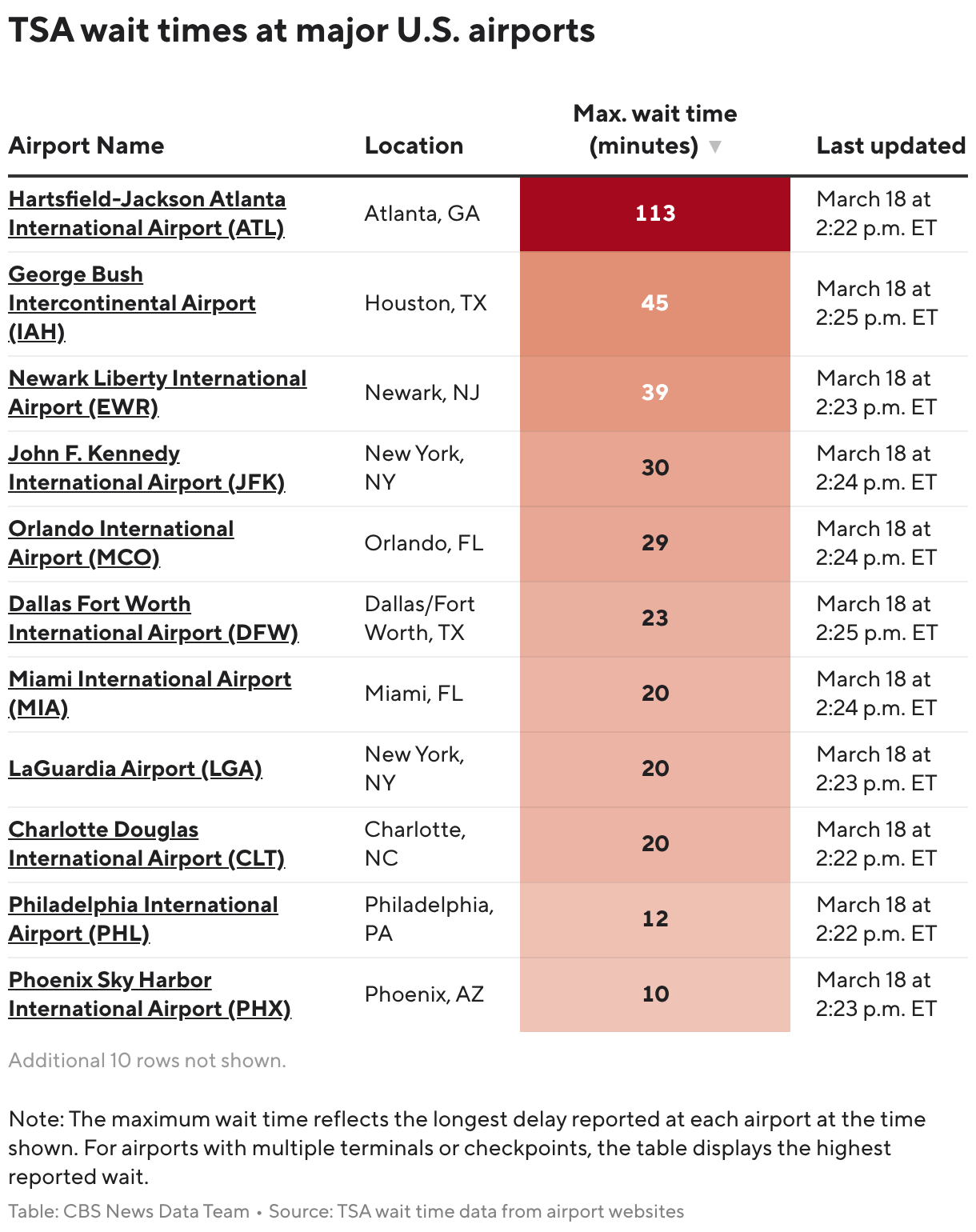
Although officials have warned that some smaller airports could be forced to close due to staffing shortages, the nation’s airports remain open. But wait times at security checkpoints are surging. At Houston’s George Bush Intercontinental Airport, lines on Friday morning reached as long as 120 minutes, according to the airport’s website.
Wait times aren’t expected to improve until government funding is restored and TSA officers receive paychecks. In the meantime, travelers should check delays before leaving for the airport.
“It’s always good to check and see if you need extra time, the same way it’s good to check traffic when you’re traveling across town,” Scott Keyes, founder of flight deals site Going.com, told CBS News.
Here’s how to find out how long a wait you could face at the airport, and some ways to speed it up.
Check airport websites
Airport websites post expected wait times to help travelers plan. For example, John F. Kennedy International Airport in New York City warns on its site that “TSA wait times may be longer than usual,” while cautioning, “Wait times can change quickly, so please allow extra time when traveling.”
Anticipated security line wait times across its terminals and lanes, such as standard versus TSA PreCheck, are updated in real time. As of early Friday afternoon, passengers in general boarding at Terminal 4 were facing wait times of 39 minutes, according to the site.
Use the TSA app
TSA’s MyTSA app sends airport security information to passengers’ phones.
The app tracks and updates airport delays, and aggregates historical information about how busy an airport is likely to be at a given time.
Other tracking sites
Other tracking websites, such as AirlineAirport.com, also track wait times at airports across the U.S. to help travelers prepare for trips. Search by airport, then toggle to “Wait Times” for up-to-date information.
Travelers with TSA PreCheck status usually move through checkpoints faster. Signing up for the agency’s “Touchless ID” program can speed up the process even more. It’s currently available at 65 airports, and its lines tend to have the shortest waits of all. Five airlines — Alaska, American, Delta, Southwest and United — currently participate in the program.
Keyes, who is enrolled and recently used touchless ID, said it made the screening process “substantially faster.”
He also recommended not checking luggage to avoid further screening delays.
Experts maintain that flying during a government shutdown remains safe, but more of a headache for travelers. The Federal Aviation Administration prioritizes safety, which sometimes means slowing down flight traffic when key personnel are absent from work.