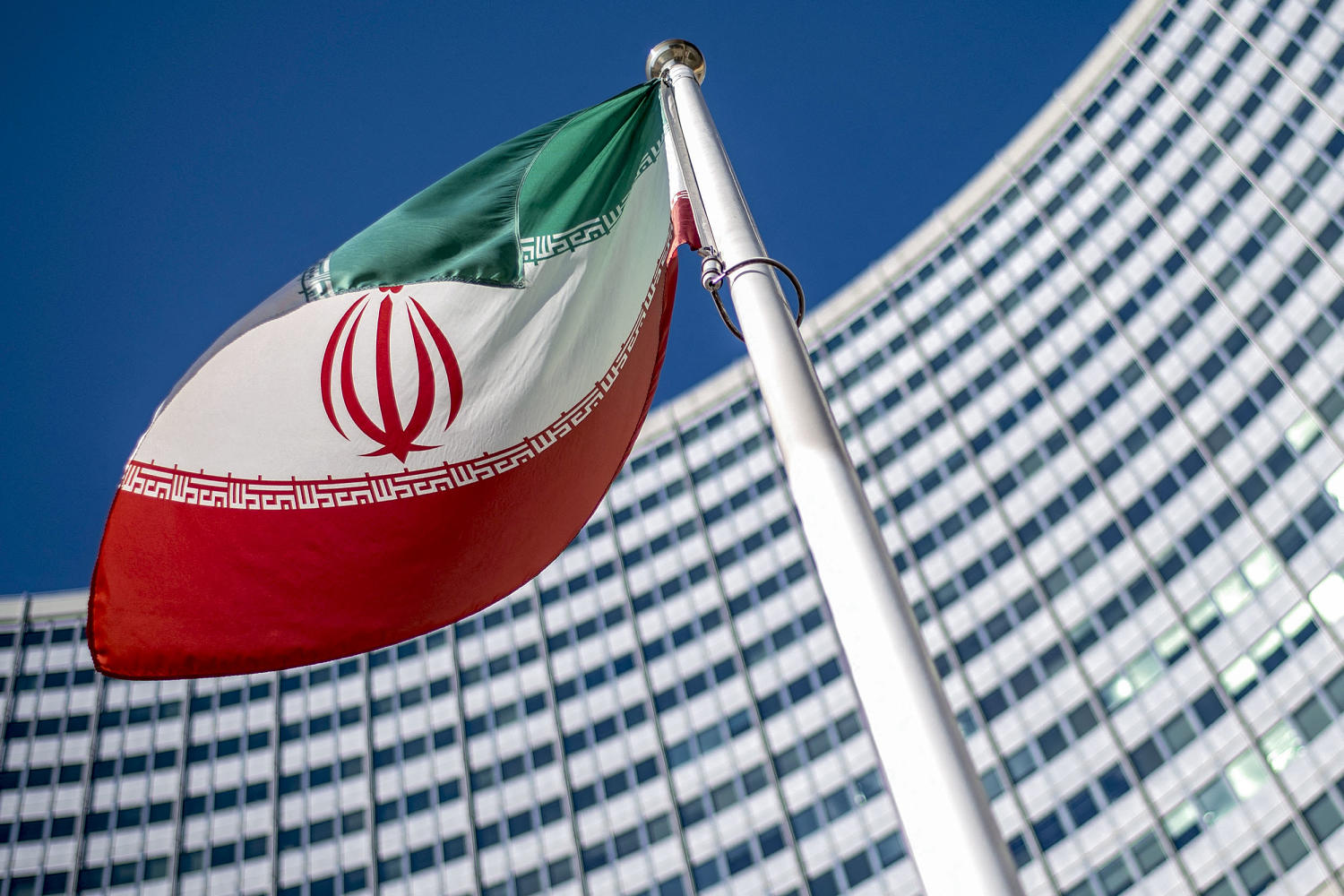
TEHRAN, Iran — The U.S. and Iran may hold diplomatic talks in Istanbul on Friday as President Donald Trump weighs a possible military strike on the Islamic Republic, four senior Middle East diplomats and a U.S. official told NBC News.
Other countries in the region are also expected to participate in the talks, the sources said.
White House special envoy Steve Witkoff and Iranian Foreign Minister Abbas Araghchi would be part of the delegations, according to four of the sources.
Iran is ready to negotiate with the U.S. and is optimistic that a deal can be reached if the goal is to get to a place where the country is devoid of nuclear weapons, two government officials in the Islamic Republic told NBC News on Monday.
NBC News reached out to the White House and the State Department, as well as the individual embassies of the Middle Eastern countries that may participate in the talks, who did not immediately respond to request for comment.
Three of the Middle East diplomats who discussed the possible meeting cautioned that details are still being arranged and that they could change.
“It’s not set in stone,” one of the diplomats said. A U.S. official said that the parties are working toward setting up the meeting in Istanbul as soon as Friday but that the details have not been finalized.
Regional diplomats are also expected to participate, according to three of the sources.
Two senior Middle East diplomats said the negotiations are being led by Turkey and backed by Qatar and Egypt.
Another senior Middle East diplomat said foreign ministers of Saudi Arabia, Qatar, the United Arab Emirates, Egypt, Pakistan and Oman have also been invited. This diplomat said the talks could address Iran’s nuclear program and U.S. demands for curbs on Iran’s missile program.
If the discussions between the U.S. and Iran take place Friday, it would mark the end of a busy week for Witkoff, who is set to meet with Israeli Prime Minister Benjamin Netanyahu in Israel on Tuesday and travel to Abu Dhabi for meetings with Ukrainian and Russian delegations Wednesday and Thursday, according to two U.S. officials.
An Israeli official said Witkoff and Netanyahu would focus on Iran and Gaza during their meeting. They did not offer further details.
Tensions have ramped up after the USS Abraham Lincoln and several American guided-missile destroyers moved into the Middle East within striking range of Iran.
It is unclear whether President Donald Trump will decide to use force. He said “we’ll find out” when he was asked Sunday whether Iran’s supreme leader, Ayatollah Ali Khamenei, was correct to predict that a U.S. attack on the country would spark a regional war.
Asked about the remarks by a reporter, Trump said he was hopeful that a deal could be struck, while cautioning that the U.S. has “the biggest, most powerful ships in the world over there.”
“We don’t make a deal, then we’ll find out whether or not he was right,” said Trump, who pulled the U.S. from the Iran nuclear deal in 2018, during his first presidential term. Known as the Joint Comprehensive Plan of Action, the deal offered Iran relief from sanctions in exchange for limiting its nuclear program. But Trump, a longtime critic of the deal, said the U.S. gave up too much for too little.
Khamenei told a crowd at his compound in Tehran earlier Sunday that “the Americans must be aware that if they wage a war this time, it will be a regional war.” He said the U.S. was interested in Iran’s oil, natural gas and other mineral resources, adding that it wanted to “seize this country, just as they controlled it before.”
Meanwhile, the mood is tense on the streets of Tehran after recent protests rocked the capital, as well as other cities across the country.
Positioned on motorbikes at intersections throughout the city are members of the Basij militia, a branch of the Islamic Revolutionary Guard Corps. The paramilitary volunteers, who are fiercely loyal to the Islamic Republic, have taken on a leading role in quashing dissent for more than two decades.
New billboards showing pro-government propaganda have also sprung up across Tehran. One in Palestine Square shows American and Israel coffins with a warning for their soldiers.
While some shops are open, many remain closed, still reeling from the collapse of Iran’s currency, the rial, which has led to a widening economic crisis and an annual inflation rate of around 40%. Years of economic mismanagement and Western sanctions aimed at cutting off funding for Iran’s nuclear program, as well the country’s war with Israel last year, have all been blamed for the financial hardship many Iranians experience.
Experts have blamed the soaring prices for food and other basic goods for sparking the protests, which in turn sparked a violent crackdown from the regime.
At least 6,842 people were killed across the country in the protests , which began in late December and ended around mid-January, according to the U.S.-based Human Rights Activists News Agency, which says that it verifies each death with a network of activists on the ground in Iran and that its data goes through “multiple internal checks.” The agency fears the death toll could be even higher.
As of Jan. 21, Iran’s government put the death toll at a far lower 3,117, saying 2,427 were civilians and members of security forces and labeling the rest as “terrorists.” In the past, Iran’s theocracy has undercounted or not reported deaths from unrest. NBC News has been unable to independently assess the death toll.
Iran said Monday that it had summoned all of the European Union ambassadors in the country to protest the listing of the paramilitary Revolutionary Guard as a terrorist group.
Iranian Affairs Foreign Ministry spokesperson Esmail Baghaei told reporters that the ambassadors had begun to be summoned on Sunday and that process continued into Monday.
“A series of actions were reviewed. Various options are being prepared and were sent to the related decision-making bodies,” Baghaei said. “We think that in the coming days, a decision will be made about a reciprocal action by the Islamic Republic of Iran toward the illegal, unreasonable and very wrong move by the E.U.”