Get unlimited access to ad-free articles and exclusive content.
That could help preserve a low-cost option for travelers. But experts warn it could create a problematic chain reaction, particularly when it comes to other struggling companies looking for financial relief.
“This equity stake stuff has opened up a Pandora’s box,” Tad DeHaven, a policy analyst at the libertarian Cato Institute, told NBC News on Wednesday.
DeHaven pointed to a growing list of government-backed equity deals across a range of industries over the past year that signal a broader expansion of federal involvement in private and public companies.
Those deals include equity-sharing agreements with semiconductor companies like Nvidia, Intel and AMD; mining firms such as MP Materials and USA Rare Earth; as well as nuclear energy and industrial companies like Westinghouse Electric Co. and U.S. Steel.
“Once you open that box,” DeHaven said, referring to those recent equity deals, it’s only a matter of time until “somebody is going to get in trouble, and they’re going to see that their [only] option to survive is to get money from the federal government.”
Wall Street is raising similar concerns. JPMorgan analyst Jamie Baker warned in a recent client note that “should the administration afford any sort of cash infusion, we believe JetBlue and Frontier would be inclined to quickly follow Spirit’s lead.”
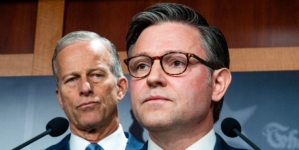
The possible agreement also faced criticism in Washington. “This is an absolutely TERRIBLE idea,” Sen. Ted Cruz, R-Texas, posted on X. Cruz chairs the Senate Committee on Commerce, Science and Transportation. Fellow Republican Sen. Tom Cotton of Arkansas called it “not the best use of taxpayer dollars.”
The White House, meanwhile, said it is actively monitoring the situation, along with “the overall health” of the U.S. aviation industry.
Such a move could fundamentally reshape competition across the airline industry, particularly for carriers that have managed to stay afloat without government support.
“Were that to happen, would American be far behind?” Baker wrote, referring to American Airlines. “Truthfully, we can think of no greater defiant gesture towards the likes of Delta and United than the government stepping in with lopsided assistance.”
There have been many changes across the broader aviation industry as companies scramble to boost revenues and achieve sustained profitability. United and American have most recently been reported as potential merger partners, though American waved off that speculation.
In a statement to NBC News, American said: “While changes in the broader airline marketplace may be necessary, a combination with United would be negative for competition and for consumers, and therefore inconsistent with our understanding of the administration’s philosophy toward the industry and principles of antitrust law.”
According to DeHaven, a Spirit rescue could tilt the balance away from normal market dynamics, explaining that “any help for Spirit very likely comes at the cost of somebody else.”
Additionally, government ownership could blur the line between regulator and operator, potentially influencing how airlines compete.
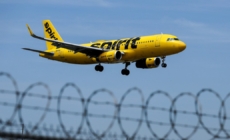
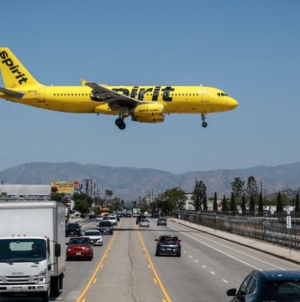
Low-cost carriers like Spirit have long shaped the airline ecosystem by offering discount prices for travelers who can’t or don’t want to buy pricier seats on larger airlines. But the company’s recent financial troubles — including two recent bankruptcy filings — have raised questions about how long it can continue to play that role.
That’s a big reason Spirit and JetBlue agreed in 2022 to merge. But the Biden administration blocked the deal two years later over concerns it would reduce competition.
“We wouldn’t be in this situation today if that merger had gone through,” said DeHaven.
Now, additional pressures, including higher fuel costs tied to the Iran war, are compounding those financial challenges. DeHaven described it as “a pattern” of policy mistake on top of policy mistake.
“You take a company that’s [already] in trouble to begin with, and then you double their fuel costs — well, yeah, you’re going to be in even bigger trouble,” he added.
President Donald Trump acknowledged Spirit’s importance in an interview with CNBC on Tuesday and even hinted at potential government support: “Spirit’s in trouble, and I’d love somebody to buy Spirit. It’s 14,000 jobs, and maybe the federal government should help that one out.”
Spirit declined to comment on the speculation and told NBC News it continues to operate as usual. Budget carriers JetBlue and Frontier did not immediately respond to requests for comment, nor did Delta, United and American.
Ultimately, though, not all of these companies may be eager to shake hands with the government.
“The administration’s already in the corporate boardroom, even without the equity stakes,” DeHaven said, a nod to Trump’s active and often very public commentary on companies’ day-to-day operations. “You don’t want a government bailout.”